Golf Courses
Assistance for Golf Courses
Montgomery County Conservation District can provide technical assistance for golf courses to improve management practices and implement projects that protect streams. We’re happy to schedule a site visit to walk the course with you.
Resources
- The Green: Golf Course Conservation (PDF)
- Golf Course Conservation — 2017 Eastern PA Turfgrass Conference (PDF)
- Golf Course Water Resources Handbook of Best Management Practices (PDF)
- Environmental Management Guidelines for Golf Courses (PDF)
- Environmental Profile: Water Use & Conservation Practices on U.S. Golf Courses (PDF)
- BMP Performance Goals (PDF)
- Best Management Practices for New York State Golf Courses (Cornell)
- PA Stormwater Best Management Practices Manual (DEP)
Services
Funding
Interested in planting trees on your course? Our TreeVitalize Watersheds grant program may be able to help. For stormwater BMPs or stream improvements, explore:
- DEP Growing Greener Grants
- DCNR Grants
- Schuylkill River Restoration Fund
- NFWF Grants
- Other Opportunities (DCNR)
Potential Environmental Impacts & Solutions
There are about 55 golf courses in Montgomery County, comprising more than 8,000 acres of intensively managed turf.
Turf often creates little organic matter and shallow roots, which limits soil stability and increases erosion. Compaction encourages runoff instead of infiltration, driving flooding and downstream pollution. To maintain playability, courses may rely on fertilizers; if application timing, rates, or setbacks are off, nutrients can reach streams and trigger algae blooms and fish kills.
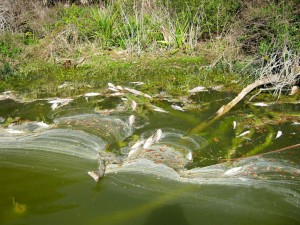
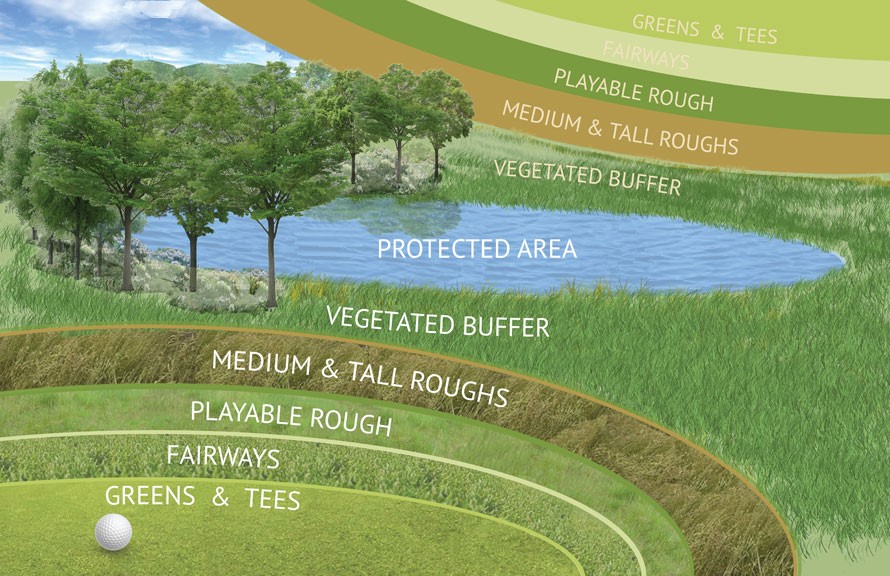
Solutions include soil testing before fertilizing, reducing mowing in rough/out-of-play areas, and implementing setbacks from waterways so fertilizers and other chemicals don’t enter streams. These BMPs help both water quality and budgets.
In Montgomery County, 32 miles of streams flow through golf courses, and many reaches lack adequate streamside buffers.
Stream buffers stabilize banks, filter pollutants, shade water, and support aquatic life. Trees are best, and widths of 50+ feet are preferred—however, any buffer is better than none. Seeding with deep-rooted native perennials and adding shrubs can quickly improve water quality and reduce maintenance.
Mapping
See golf course locations in Montgomery County via the Planning Commission’s map gallery by clicking here and selecting the “Golf Course” tab.
Financial and other support for this project was provided by the Pennsylvania Association of Conservation Districts, Inc. through a grant from the Pennsylvania Department of Environmental Protection under Section 319 of the Clean Water Act, administered by the U.S. Environmental Protection Agency.